
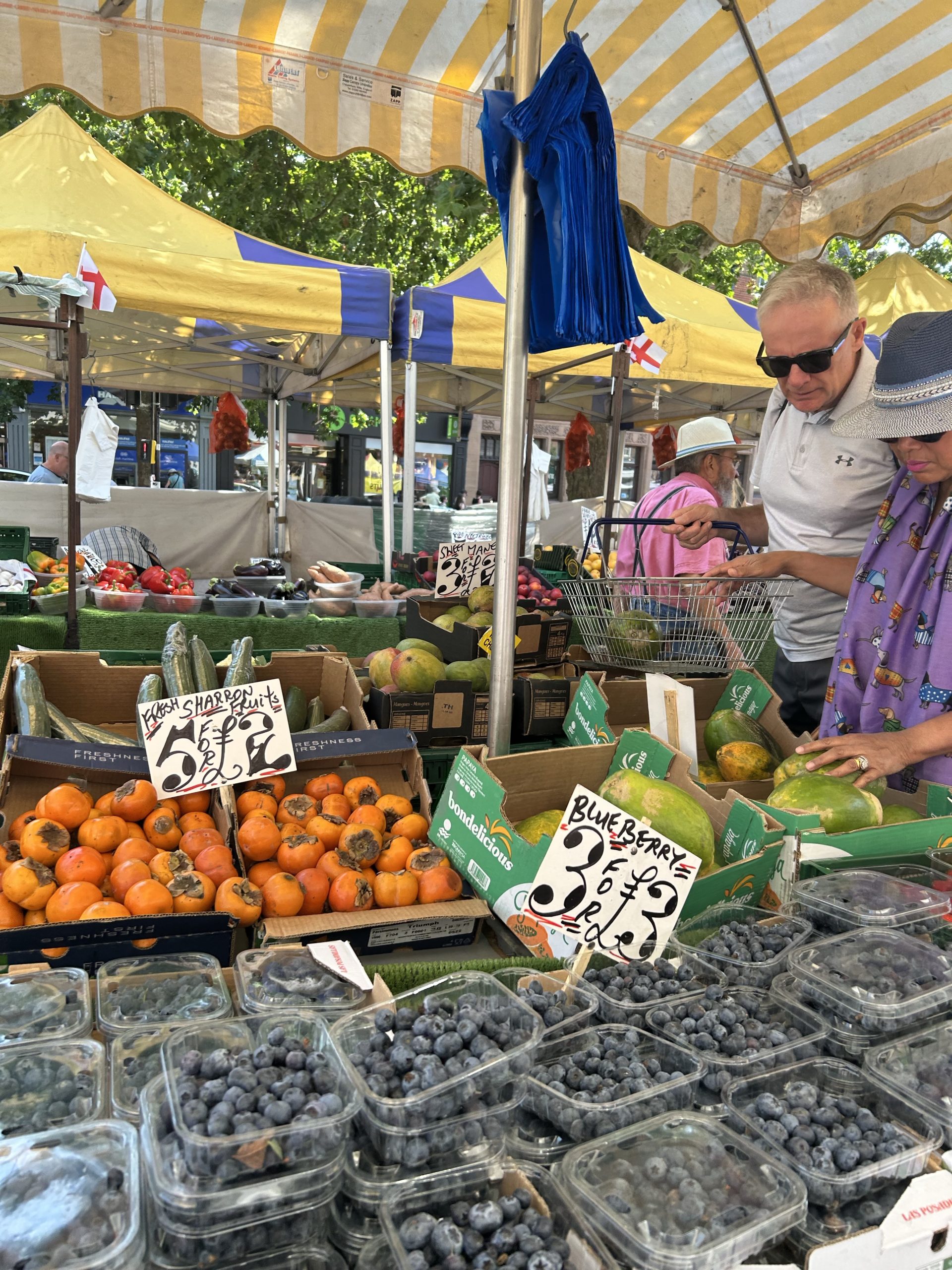
Supporting high street markets helps to rewire local economies, locking in wealth for local communities.
Markets are a tale as old as time, a component of how we have built places for millennia. A place where communities once gathered to share goods and ideas at the ancient agora. Where I now live in (modern) Athens, the market is literally called “the people’s”/ popular (market) – the laiki. It’s a weekly, noisy neighbourhood gathering of producers and sellers of vegetables, fruit, plants, underwear and kitchen utensils.
When I asked the team about their local markets, there was a flurry of photos on the group chat.
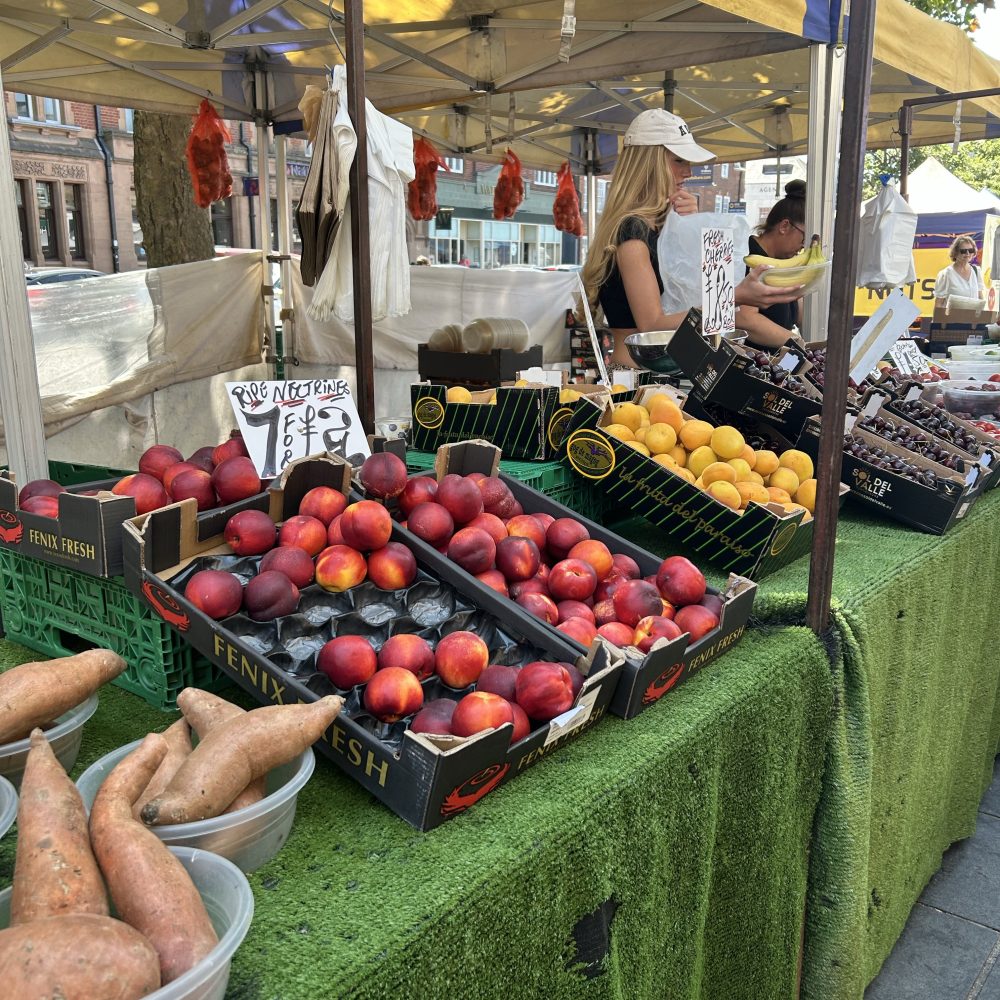
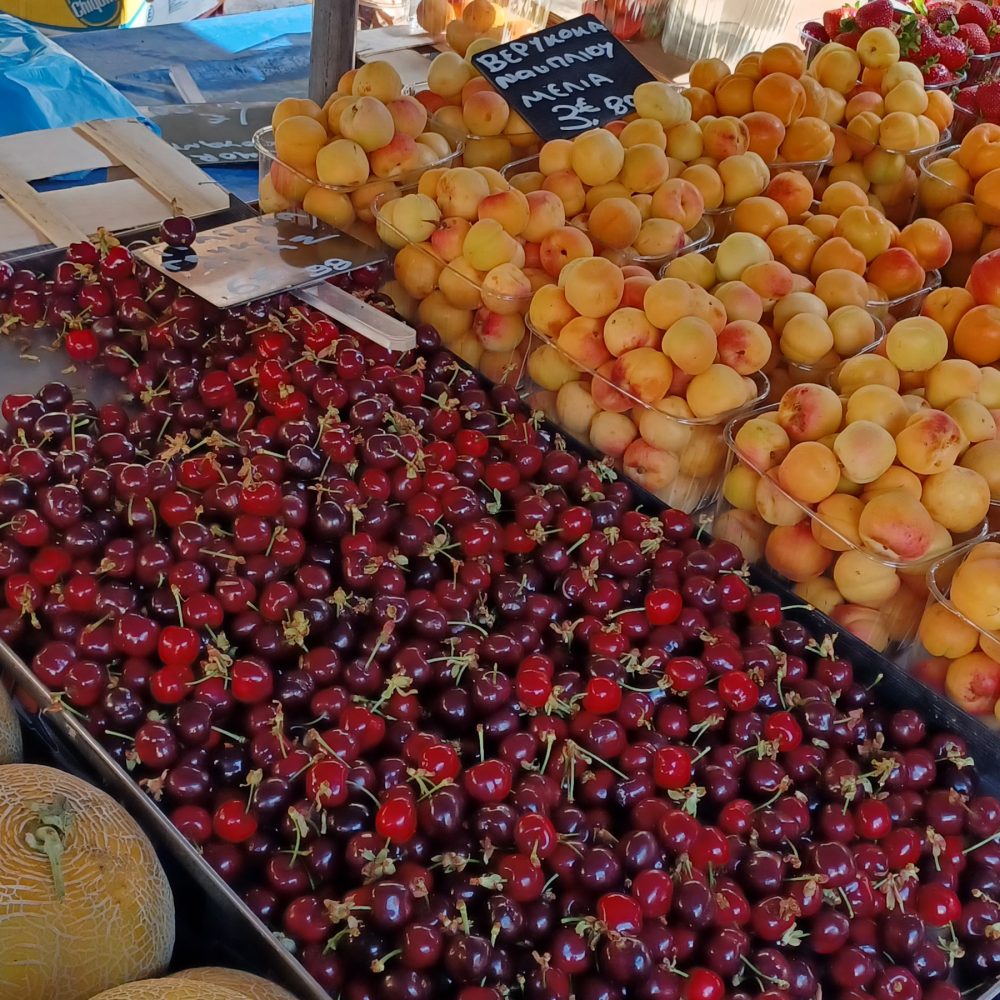
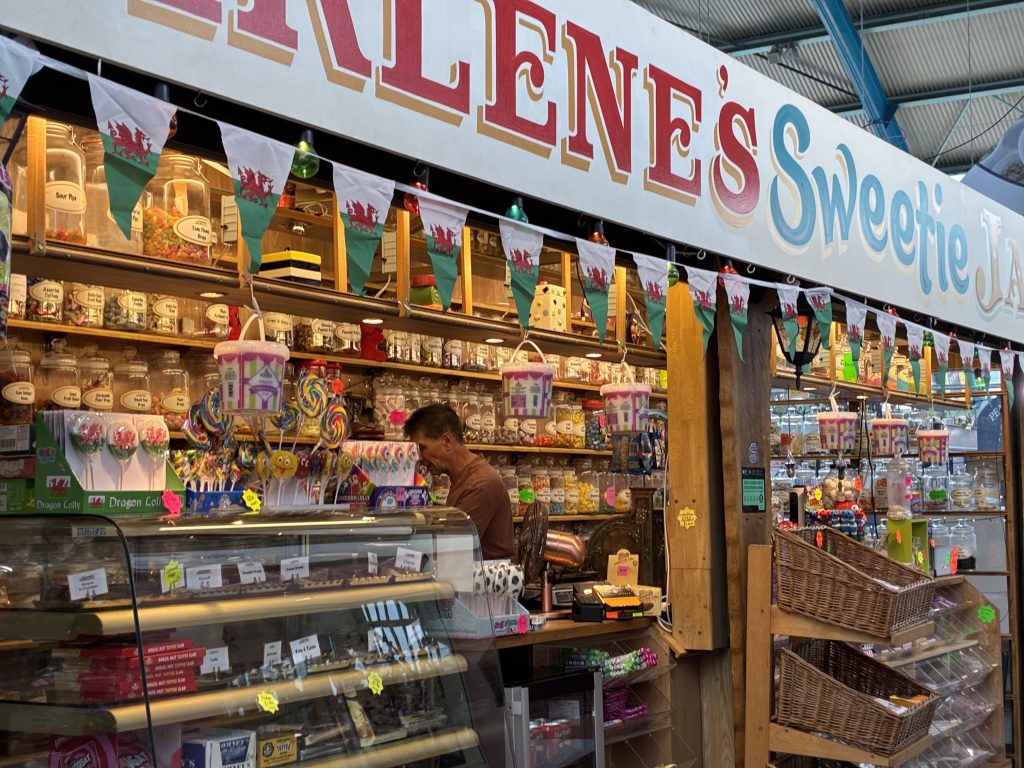
“Markets are a microcosm of the wider economy. They reflect what a ‘market’ could ideally be – a flexible, animated place of exchange of goods via people.”
They also hold up a mirror, that show us what bigger ‘markets’ have become – global, faceless systems that are not working for people and place. The ‘market’ has become the reason that politician fear to act, where real estate value trumps local need, and citizens and neighbours are valued merely as consumers. These markets are about unsustainable consumption, transactions not relationships. Unaccountable owners far away, extracting profits from those on the frontline.
Exploring what kind of ‘market’ we want to drive our local economies can be a way of thinking of local and regional government as facilitators of rewiring relationships between people, place and building our foundational economy.
Research by the Institute of Place Management has offered multiple reasons why markets matter economically, socially and politically…
Markets matter economically
Offering low barriers to entry, markets are excellent business incubators. In the UK, the markets industry directly employs over 100,000 people. Due to the low-risk nature of setting up a market business, they are often also places of innovation, experiment and education.
Markets also positively impact on their surrounding town centres – generating footfall increases of around 25% vs non-market days as well as increased retail sales, with between 55% to 71% of market visitors spending money in other shops. An analysis of the projects funded by the UK Shared Prosperity Fund shows that when markets are supported through effective place planning, the benefits extend beyond the market itself.
Markets matter socially
As well as providing access to affordable goods, markets are places of social interaction – used by different incomes, ages, genders and cultures. Recent research has also evidenced that markets are more important for social inclusion than parks, libraries or even cafes!
Markets are crucial to the distinct identity of a town or area both for residents as well as visitors, for whom they provide an authentic atmosphere and the chance to take part in the everyday life of the place they are visiting.
Markets matter politically
Markets often promote sustainability through locally sourced products, and through serving local communities who mainly walk or use public transport. They also promote community health through the availability of fresh and affordable food.
Reflections for councils and strategic authorities
Our Thriving Places Approach helps us to draw out a list of questions you might want to ask about your local area and the potential for developing and expanding your market offer.
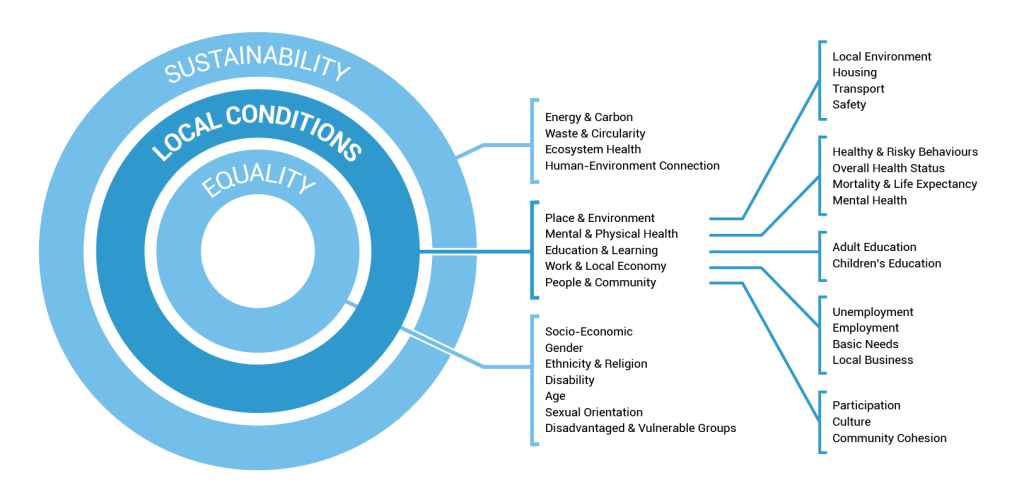
For building thriving local places:
- Where are your markets and who is using them? Which groups do they support and who else might benefit from them?
- What is the history of your market and how does it form part of the story of your community?
- How are, or could, your markets contribute to a sense of connection and belonging to community and place?
- How can markets connect people to the people and products they need to live healthy lives?
For strengthening regional economies:
- How are, or could, your markets contributing more widely to your area economically – for example by providing (access to) employment, or a site where people can explore entrepreneurship?
- How can your markets fit into regional skills and business support policies and programmes?
- How are your markets helping achieve your sustainable food strategy and environmental objectives and is there more they could do?
For taking collective action:
- How could your markets be better supported through planning policies and other local strategies?
- How are you connecting them to Pride in Place and other community development areas?
- Whose role is it to support markets, and what other departments or partners could help?
How we can help
- Data. Our Thriving Places Index is an evidence-based map of the key interconnected conditions a place needs to grow wellbeing in a fair and sustainable way. We collect and synthesise data at a local authority level (in England) and can provide data and advise on how to use the data to make assessments and informed decisions for your area.
- Delivery. We can provide expert support to develop and review your strategies and approaches to supporting markets in your area, for example in your high street strategies. Our specialists can help develop tangible plans for implementing your ideas.
- Deliberation. We can provide facilitation to bring together groups to explore the questions presented above, using our Thriving Places Model as a framework to guide discussions around the questions: Are we creating the right local conditions for people to thrive now and in the future? Are we doing that fairly, so everyone can thrive, and sustainably?
With thanks to our brilliant Placemaking Associate and high street expert Esther Worboys for collaborating with us on this post.
Are you responsible for ensuring your local market can thrive? Want data, insights or support with your strategy? Do drop us an email.

Comments are closed.