“If we’re looking at GDP – if a water company pumps sewage into the water and then pays for that to be cleaned up, then that technically improves your GDP, and that’s economic growth. That would seem absurd to most people, and it’s not a way to do things.”
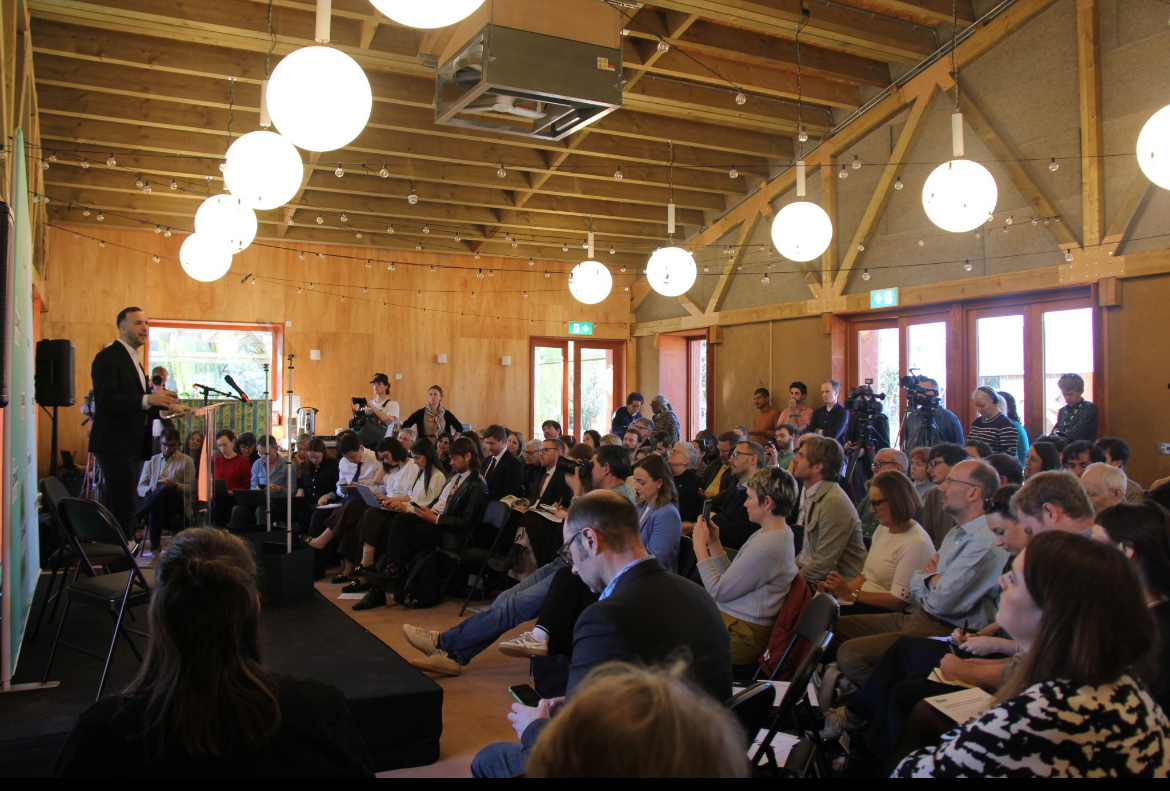
So said Zak Polanski yesterday as he took to the stage to deliver his first ever economic speech as the Green Party leader, at an event hosted by the New Economics Foundation to celebrate its 40th birthday.
Back in 1983, when Polanski was just a year old, a group of academics and radical thinkers came together to write a letter, calling for an end to the ‘growth at all costs’ mindset, pointing out the many harmful practices carried out in its name.
That letter was the beginnings of the New Economics Foundation, which has now been in formal existence for 40 years. The idea that fiscal decisions really should be driven by wellbeing goals has in that time shifted from a radical proposition to an increasingly accepted view, with more than 500 organisations around the world calling for an economy rooted in wellbeing, and 6 national governments now following a wellbeing framework of some kind (Scotland, New Zealand, Iceland, Wales, Finland, and Canada). The UN itself is now undertaking a significant project to move “beyond GDP” in how progress is measured internationally.
Yet here in the UK, despite Wales placing a legal duty on public bodies to consider their long-term impact, Scotland agreeing to a National Performance Framework focusing on economic, health, education, social justice and environmental indicators and many local authorities in England now choosing to measure progress against wellbeing goals – taking a wellbeing-focused approach to the economy across the whole of the UK has not been considered as a real possibility by mainstream political parties. This seems to be changing.
Yesterday, with the BBC, ITN, Sky News, The Financial Times and all the UK’s national media in attendance, Polanski announced that the Green Party is committed to replacing GDP targets with wellbeing goals.
Sitting in the audience, as academics, researchers and practitioners who have been calling for the advent for a new economy for 17 years ourselves, it felt good to hear this. The discussion about modelling the whole country’s economy on goals that include clean air for all, good levels of public health and cohesive communities, is a conversation now finally being opened up across political parties, and increasingly in mainstream media. The need has felt acute to many of us on the ground, for so long.
Adjacent to a vision of an economy that’s focused on wellbeing, came a rallying call for the end of extractive wealth-building practices by Polanski – also an important theme for us here at the Centre For Thriving Places. The very same day we heard Polanski talk about the need to “end ‘Rip Off Britain: to make a country we can all afford to live in and to end the privatisation penalty”, our very own Rosie Maguire spoke to Fi Glover, on the ‘Off Air with Fi and Jane’ podcast on Times Radio, about the levels of extraction in children’s homes that we researched last year with our partners in the RORE programme, and why this practice has to end. Rosie pointed out that in 3 regions alone, £88 million ended up invested in private equity or offshore, in just 3 years. And quoted the Competitions and Markets’ Authority finding, that the largest 15 children’s home providers in the UK, somehow made 23 per cent profit.
At the end of the show came the promise from the Department of Education that:
“We are introducing tough new laws to end profiteering in children’s homes and will not hesitate to cap provider profits, if unacceptable profiteering continues. We want all children in care to be in loving homes where they get the support they need.”
Re-wiring our economy: somewhere, deep down, we all recognise that it is time. And finally, a wider system-based solution has the support of what’s fast becoming a major political force.

Comments are closed.